A Letter to No Frills About Offensive Ad

Dear No Frills,

I’m happy that you sell bananas. I like bananas.

I once read that if you dress up as a banana and eat a banana, you are a cannibananabal. It’s true. I read it one day on my joke-of-the-day calendar.

Kidding aside, I’m writing to express my disappointment with some of your advertising. I saw this print ad outside of my local No Frills supermarket:

no frills bananas
Advertisement outside local supermarket.

I like the simplicity of your design. Unfortunately, however, your advertisement contributes to the stigma surrounding mental illness. The implied meaning of the word bananas in your pun is a derogatory term and hurtful to many individuals who experience mental illness.

I hope you consider pulling the offensive advertisement.
cra-zy

cra-zy
adjective
mentally deranged

At two distinct times in my life, I was non compos mentis, which in Latin means not having control of one’s mind.

Rest assured, I am totally compos mentis right now.

Yet every day I’m reminded of the agony of losing my mind. First off, people use the word crazy incorrectly. Each time, it reminds me of times of personal despair and anguish. Second, words like nuts, crackers, bananas, and loony are commonly used words that stigmatize people with mental illness. For me, they’re more reminders of the dark nights of my soul.

Work is crazy. The weather is crazy. That guy drives me nuts. That woman is bananas. C’mon, people! The English language is rich with alternate adjectives.

We need to stop using words that are harmful and make a conscious effort to refrain from using certain language.

Dr. Gail Saltz, psychiatrist and author, shares my beliefs. In her book The Power of Different: The Link Between Disorder and Genius she offers a suggestion to society:

“Stop shaming those who are in the struggle, and banish words such as crazy and nuts from our speech.”

Hurtful words have become common in today’s vernacular. I wish I could change the world, but I can’t. I can, however, make thoughtful word choices in my own speech, and hey, maybe I can influence one or two blog readers to change their way of thinking.

On Depression

Last week I posted a poem I wrote on anxiety. I used it recently,  in conjunction with the following poem I wrote on depression, to initiate a discussion on mental health.

On Depression

Depression is a shadow, following me in remission.
He appears through the bathroom door, like a deranged Jack Nicholson, as I take my daily medication.
He pokes fun at me on my way to the therapist’s.
He reminds me of his power, nudging me toward the infinite abyss.

Depression is a light, guiding me in remission.
He appears on a street corner, like a transformed Jack Nicholson, as I kiss the woman I love.
He laughs with me on my way to work.
He reminds me of his power, nudging me toward the endless beauty.

On Anxiety

I am afraid of rolling balls and prowling tigers.
They are all around me.
I cannot breathe.

Every day, a child’s ball rolls in front of my car as I drive.
Every night, a saber-toothed tiger prowls as I sleep.

I am afraid of rolling balls and prowling tigers.
They are all around me.
I cannot breathe.

Do I deflate the balls and attack the tigers?
Or do I accept them and let them be?
I want to breathe again.

The Evening My Wife Burnt My Heart

There was nothing out of the ordinary that night.

Mind you, there was a new dish on the table that night, but that was the new normal. My wife had been experimenting with meals since she had been on a new health kick.

The night’s dish was vegetarian tikka masala.

The tikka masala was a lot spicier than the food I’m used to, but I was hungry that night. It didn’t taste too bad. In fact, I went back for seconds.

It was about 30 minutes later when the pain started. My chest was on fire. I gulped down a few antacid tablets, but the fire continued to burn. It burned long and it burned bright. Death was a possibility that night.

“Was there garlic in that?” I ask.

“Yes.”

“Onions?”

“Yes.”

“Tomato sauce?” I ask.

“No. Diced tomatoes,” she says.

“That’s worse,” I say. “Spices? What kind?”

“It’s called garam masala.”

I look up garam masala: acidic and may cause acid reflux.

That evening, my wife— the heart arsonist—mixed in all the ingredients that contribute to my acid reflux and ignited it with a new, near-lethal weapon—garam masala.

“Honestly, I didn’t think you’d actually eat it,” she says.

“I guess I’ll know for next time, honey.”

Reader’s Digest and my Worrying Mind

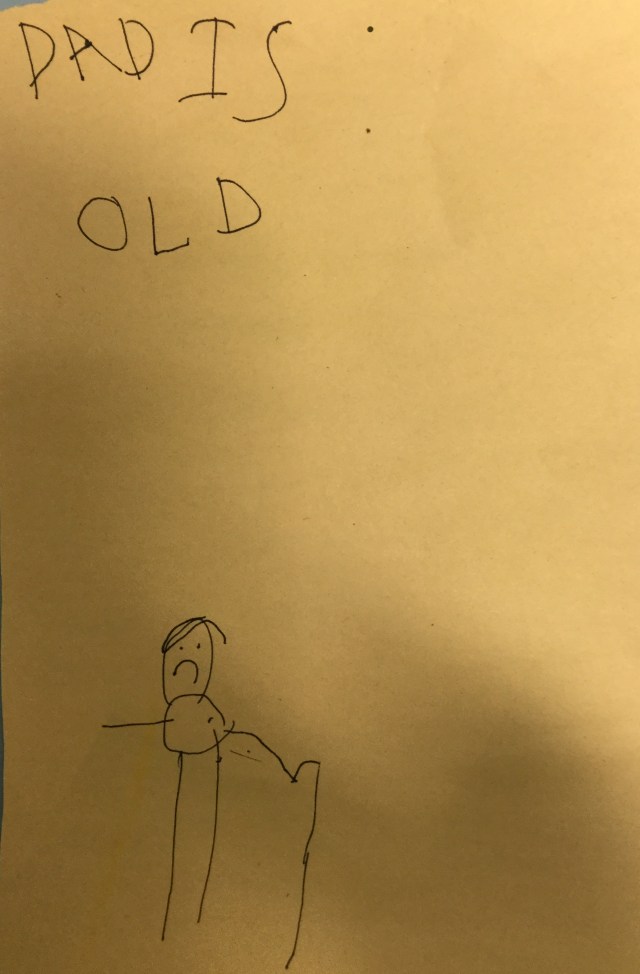
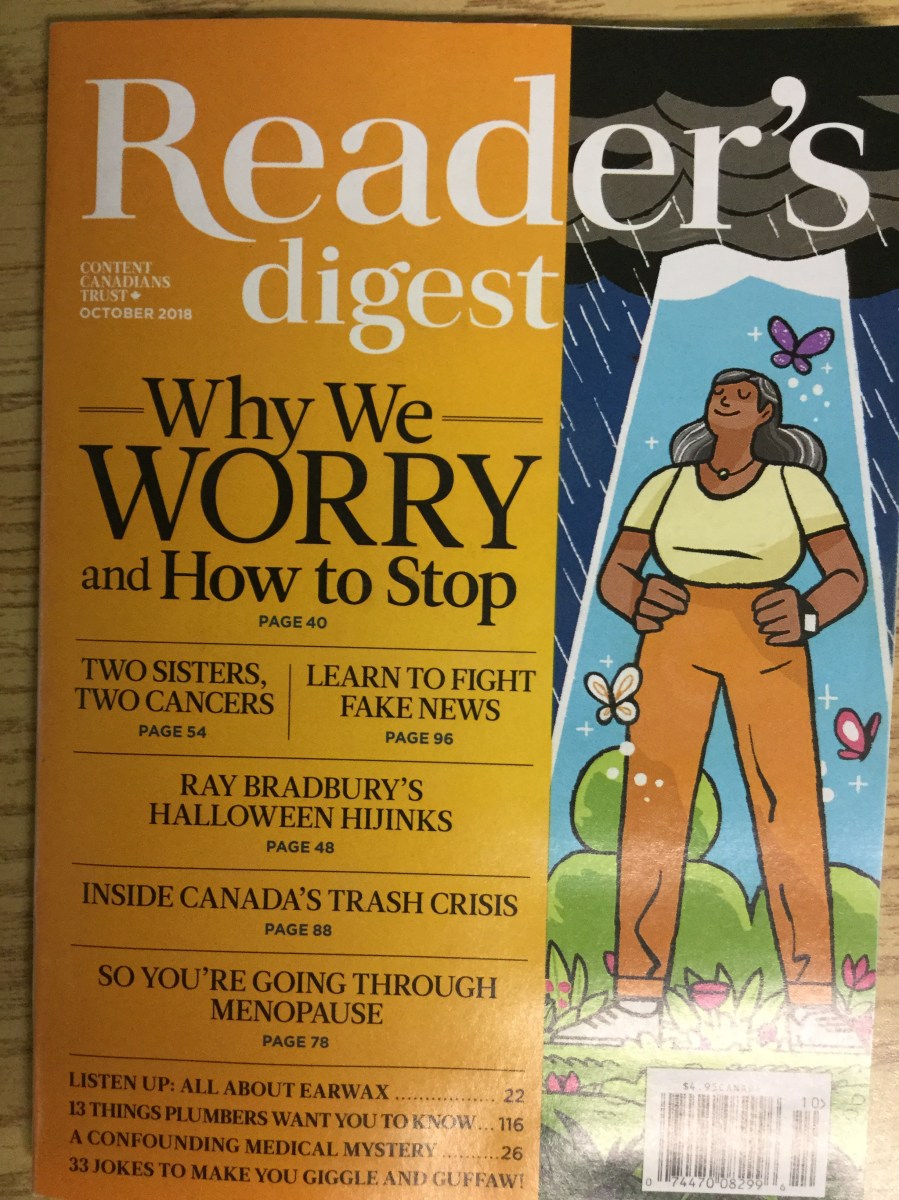
My wife makes fun of me as I pick up the latest issue of Reader’s Digest.

“You’re so old.”

“But I like Reader’s Digest.”

“Yeah, that makes you old.”

I think about this claim as I adjust my glasses.

“And those silver rimmed glasses make you look old.”

I worry about looking old. I worry about getting old. I worry about my life. I worry about my wife. Is she going through menopause? I worry about getting cancer. I worry about fake news. I worry about the amount of trash piling up in our country. I worry about earwax. What’s earwax for anyway? I wonder why I worry and how to stop.

Anger Management Strategy from a 6-Year-Old

Like all parents, I was eating breakfast with my young children and quizzing them in the subject of mathematics.

There was one particularly difficult question that my 5-year-old son was struggling with. My 6-year-old jumped in and gave an answer. My son got angry. He stormed out of the room and started screaming and throwing things.

My daughter said, “Sam, you need to roll that anger into a ball and throw it out the window.”

I asked her where she learned that good strategy. She said her teacher.

I applaud those who have an awareness of their feelings and use calming techniques before they lose their cool. And I especially applaud the primary teachers who teach children these strategies.