Prioritizing Accessibility

Here’s a real problem that I’m embarrassed about: I have been blogging for a couple months now, and now my goal is to make my blog site more accessible to all readers.

The problem is not the goal, of course. It’s an admirable goal. The problem is the timing of the goal. Improving accessibility is often an afterthought when it should be a top priority.

Barriers to accessibility are like my kids’ toys lying around the house: they’re annoying, they’re everywhere, and they’re harmful. Stepping on LEGO© hurts!

Awareness of the barriers to accessibility has improved in recent years, but more is needed. Sure, it takes time to break down large-scale societal and systemic barriers. But barriers can be broken. Perhaps it starts with individuals. I hope that individuals start thinking about accessibility issues at the onset of a project. I hope that this forethought becomes the norm. I hope that one day barriers won’t need to be broken because they won’t exist to start with.

Now I shall go about picking up my LEGO© pieces.

I wish I hadn’t put them there in the first place.
On Being a Hero

If you’re lucky, there will be opportunities in your life to be a hero.

I was lucky enough to be given such an opportunity recently.

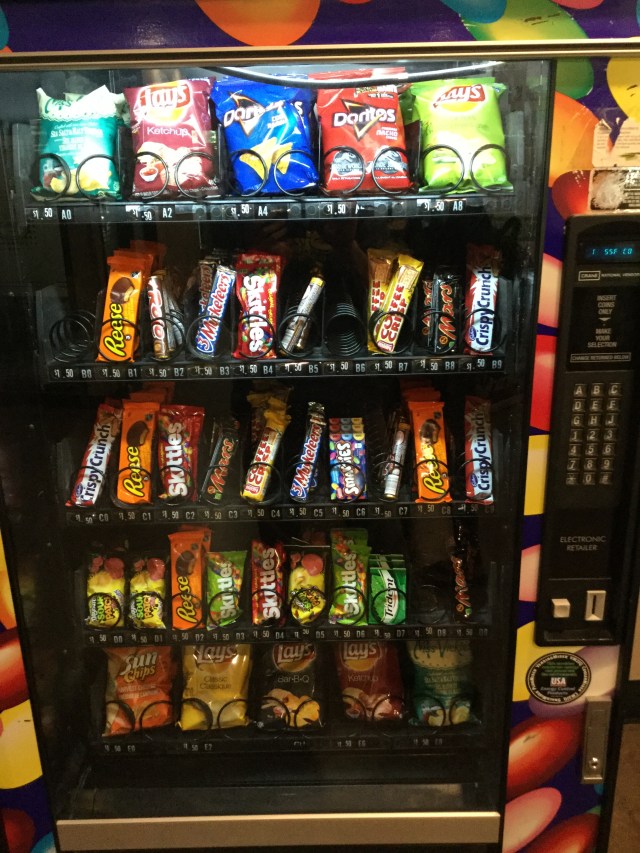
I wanted to taste the feeling. That is why I was purchasing a Coke© from a vending machine. Beside me, another individual was purchasing a bag of Doritos© from an adjacent vending machine.

doritos
A vending machine with Doritos at the top. Photo by M. Fleming.

My Coke© dispensed easily from the machine. I was excited to open happiness and make it real. My enthusiasm, however, was short-lived, for beside me, tragedy struck. The man’s Doritos© had not dispensed from the machine. The bag had fallen from its initial position and was stuck on a ledge.

The man’s face darkened. Oh, the disappointment and anguish. I felt his agony.

I saw my heroic opportunity and pounced. I tapped the glass. I tapped harder. The man’s face brightened a little. I saw a small sense of hope in his eyes. But the cheesy tortilla chips were still stuck. I tapped the glass harder. I stuck my hand in the bottom of the machine. It read, “push,” so I pushed. I pushed harder and harder. Finally, the Doritos© dislodged.

The man’s face lit up. The audience cheered. And the hero smiled.

Nothing feels more heroic than freeing another person’s Doritos©. So be mindful of the little golden things in life.

Bad Fences Make Good Neighbours

On a Friday in May in 2018, 100 km/hr winds hit southern Ontario and Quebec. Trees were toppled, shingles were flown, and power was cut.

During the windstorm, my neighbour climbed onto his roof and it was so windy, it blew his fascia off.

My fascia was okay, but my backyard fence was not as lucky. My old fence panels were down. My deteriorated fence posts were knocked out.

There’s an old saying that says good fences make good neighbours. But I think they’ve got it backwards. I say bad fences make good neighbours, and here’s why.

The collapse of my wobbly fence brought me closer to my neighbours. Gone were trees, shingles, fascia, and fences, but our shared sense of loss and our common desire to repair things created a stronger community. My neighbours helped me mend my broken fence, and I spent more time with my neighbours in one afternoon fixing my fence than I had in a long time. For one afternoon, I experienced something that is rare in our fast-paced, individualized, technological world—a sense of fellowship. It was an amazing feeling.

And it’s why I hope my old fence blows down again soon.

Insights from Narrative Counselling

As a professional involved in student development in a post-secondary setting, I was recently intrigued when a colleague outside my organization told me he had started exploring narrative counselling in his work.

He said individuals are often stuck because they have created unfavourable story lines of how their lives are playing out. They are unaware that there are infinite story lines that can be created for their lives. This caught my attention because one, I like stories, and two, I like talks of infinity.

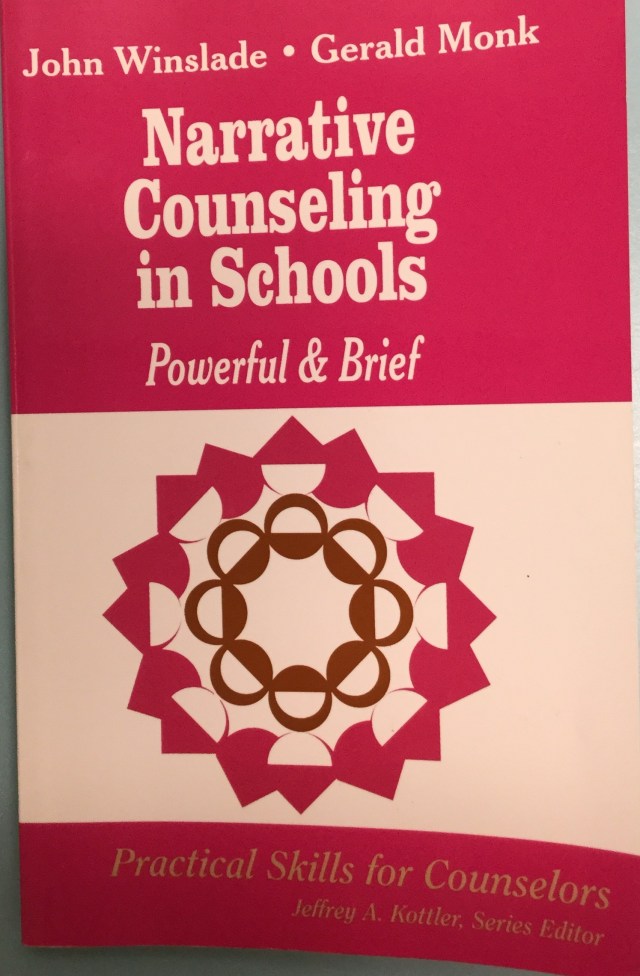
To begin my exploration of narrative counselling, I read Narrative Counseling in Schools. It was powerful and brief.

Book by John Winslade and Gerald Monk.
Cover of book Narrative Counseling in Schools. Photo by M. Fleming

Everyone can benefit from some of the ideas highlighted in the book.

First, we can realize that everyone has gifts and abilities. When we interact with others, we can approach conversations with a respectful curiosity, look for hidden talents, and help construct appealing story lines.

Second, we can encourage and inspire others to write different scripts for their lives. The authors of the book write:

For most of us, it is not possible to make radical changes in our lives without somebody cheering us on.

I’m excited to help people craft their stories, and I’m excited to cheer them on. I’m also excited that others can help me craft my story. And I hope they cheer me on too.

In the Pit

My friend tells me a story that goes something like this.

There’s a guy trapped in a dark, deep pit covered in the stuff that gets flung at Tim Hortons.

He calls for help.

A guy passes the pit but doesn’t hear him. Another person hears but ignores. Another person tries to help but is unsuccessful.

Finally, another guy jumps in the pit.

“You idiot! What are you doing? Now there’s two of us down here.”

“You’re right,” the guy answers. “But I’ve been here before. And I know the way out.”

I recently returned to the pit.
I didn’t want to go.

I knew it would be hard.
I knew it would be uncomfortable.
I knew it would be painful.

I recently returned to the pit.
I didn’t want to go.
But I did.

I had to.

And I will go back again.
Even though I don’t want to.
Because there are people down there.

I tell them
I’ve been here before.
And I know the way out.

Braving with Brené

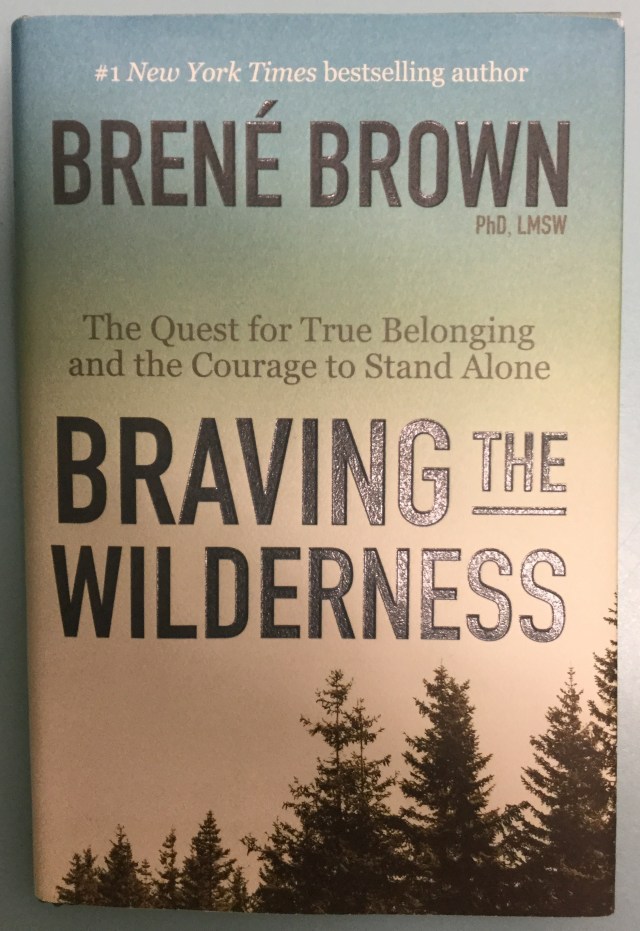
I saw a book on our coffee table one day.

wilderness book
Cover of book Braving the Wilderness. Photo by M. Fleming

I recognized the author. A couple years ago, I had watched a TED talk she gave on vulnerability. It’s actually one of the most-viewed TED talks of all time.

Back to the book Braving the Wilderness, I asked the reader of the book on our coffee table if it was any good.

“I think you’d like it,” she said.

So I started reading.

“What do you think so far?” she asked.

“I’m not sure I can relate. I’ve never felt like a teenager girl who doesn’t fit in,” I said.

“Well, there must be times in your life when you feel you don’t belong,” she said.

“All the time! But it doesn’t really bother me.”

Well, yes and no.

Belonging to ourselves means being called to stand alone—to brave the wilderness of uncertainty, vulnerability, and criticism.

I have seen this wilderness.
I have been to this wilderness.
I have become this wilderness.

And you’re right, Brené:
It’s a difficult place.
It’s a desolate place.
It’s a lonely place.
It’s an unpleasant, painful, and awful place.

I try to run from this place.

Yet it pulls me back.

Because you’re right, Brené:
It’s a beautiful place.
It’s a mystical place.
It’s a daring place.
It’s an amazing, vibrant, and loving place.

It’s where I want to be.

The Stories We Tell

At the time of 2:00 a.m. on a day in May in the year 2012, amniotic fluid drenched the carpet in a hallway of an 11th floor apartment on Walker Avenue.

I was excited. I was scared. I was unprepared.

By 2:00 p.m. I was exhausted. Being a birth coach is hard work! It’s especially hard for a person as empathetic as I am. By 3:00 p.m. I was in extreme pain, suffering from a migraine. The lack of sleep, the constant doling out of ice chips, and the extreme outpouring of emotions had taken their toll.

“Go home, honey,” she said. “Get some rest,” she said.

“Okay,” I said.

I went home to the soaked carpet knowing it had been the best day of my life, knowing I had experienced a miracle, knowing what it meant to love and be loved, and knowing that I had become a dad.

That’s the story of my daughter’s birth. Is it accurate? Is it embellished? Is it true? That is for the reader to decide. But I will tell you this, and it’s a truth I was reminded of this past Sunday: There are truths in the stories we tell.

After telling a story, my friend Hermione succinctly said:

Stories bring us together.

And when a rock-climbing, rebellious, spiritual, and insightful Kiwi tells stories, the truths become clearer.

Retrieving Golden Lessons

Photograph of my Golden Retriever Richard lying on a deck outside.
Richard, a loving canine. Photo by M. Fleming

The year was 2008. For me, 2008 was a year of first dates. Funny, there weren’t too many second dates. Anyway, I remember on one first date, I went to see the movie Marley & Me about a family and their dog. By the final scene, the entire audience was in tears. Everyone, that is, except for my date. I knew at that moment that my date had no heart. There would be no second date.

Almost everyone longs for a relationship like the one between John Grogan (played by Owen Wilson) and Marley (played by many yellow Labradors). Sometimes, however, fate has other plans. Fate had other plans for the human-canine bond between Richard (my Golden Retriever) and me. Nonetheless, Richard taught me some things during our time together.

First, don’t hold grudges. When I was upset with King Richard or if Richard was upset with me, he never carried feelings of bitterness or resentment. In fact, seconds after a disagreement, Richard would lick my face.

Second, live in the moment. From what I could tell, Little Richard spent little time living in the past or future. He was always savouring the present. I am grateful that when I was with Richard, he reminded me to live in the moment.

Third, enjoy the simple things in life. Richard Bob Lloyd Harry also reminded me to love the simple things: running, walking, cuddling, eating, drinking, playing, butt sniffing…Okay, maybe not that last one.

Achieving Success with ADD

I have a friend who is highly creative, and there seems to be no stoppage to his original ideas. Whereas most creative individuals have a bucket of creative ideas, my friend has a bottomless well where he can retrieve the divine H2O at will.

Interestingly, creativity is a common characteristic of people with Attention Deficit Disorder (ADD).

In my work, I help a number of students with ADD. Outside of my work, I interact with a number of people with ADD. Although I do not have ADD myself, I do have a limited attention span and am easily distracted.

Here are two things I’ve discovered about successful individuals with ADD:

First, they own their ADD. Rather than use it as an excuse, they understand and recognize some of their challenges and develop workarounds. For example, if they have a tendency to forget appointments, they use electronic reminders. If they often lose things like their keys or phone, they designate a specific place for them.

Second, they embrace their strengths. Many people focus on the negatives associated with ADD such as distractibility, impulsivity, or forgetfulness. Successful individuals with ADD, however, not only develop workarounds to compensate for their challenges, but also embrace their strengths. For instance, they see their creativity, originality, or high energy as gifts and find ways to best utilize their positive traits.

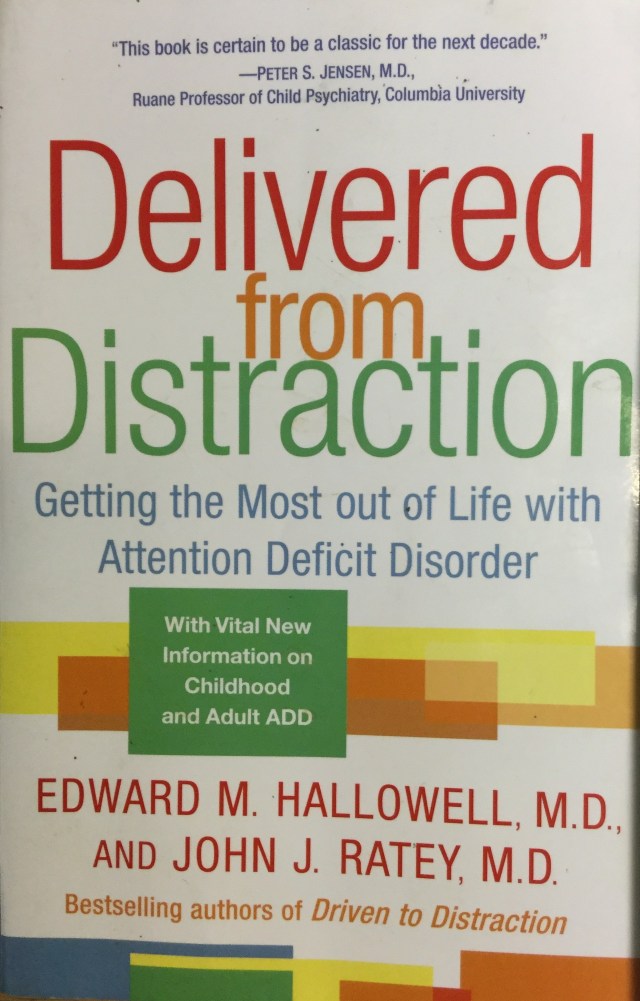
A great book related to Attention Deficit Disorder is Delivered from Distraction.

Book by Edward Hallowell and John Ratey.
Cover of Delivered from Distraction Photo by M. Fleming

In one chapter, the authors list seven habits of highly effective adults with ADD. Here are four:

  1. Do what you are good at.
  2. Have a creative outlet.
  3. Organize enough to achieve your goals.
  4. Regularly connect with some close friends.

The authors also offer an inspiring message:

Everyone who has ADD can sculpt a fulfilling, joyful life out of what they’ve been born with.

I’ll take it one step further: Everyone can sculpt a fulfilling, joyful life out of what they’ve been born with.

Enjoy sculpting.

Developing a Growth Mindset

A number of years ago when I was a number of years younger, I worked with a particularly challenging student. It seemed that it didn’t matter how many different ways I tried to explain a concept, she didn’t get it. If she did understand something, it seemed she forgot it the next day. I thought there would be no way she would pass a course.

But this particular challenging student who I worked with a number of years ago when I was a number years younger surprised me. She worked hard. She persisted. If she did poorly on a test, she worked harder. If she did well on a test, she worked harder. She persevered. Not only did she pass a course, she completed an entire college program.

I had misjudged her. I made the mistake of believing her abilities were fixed and that no amount of effort would help.

Whereas I had a fixed mindset, my student had a growth mindset.

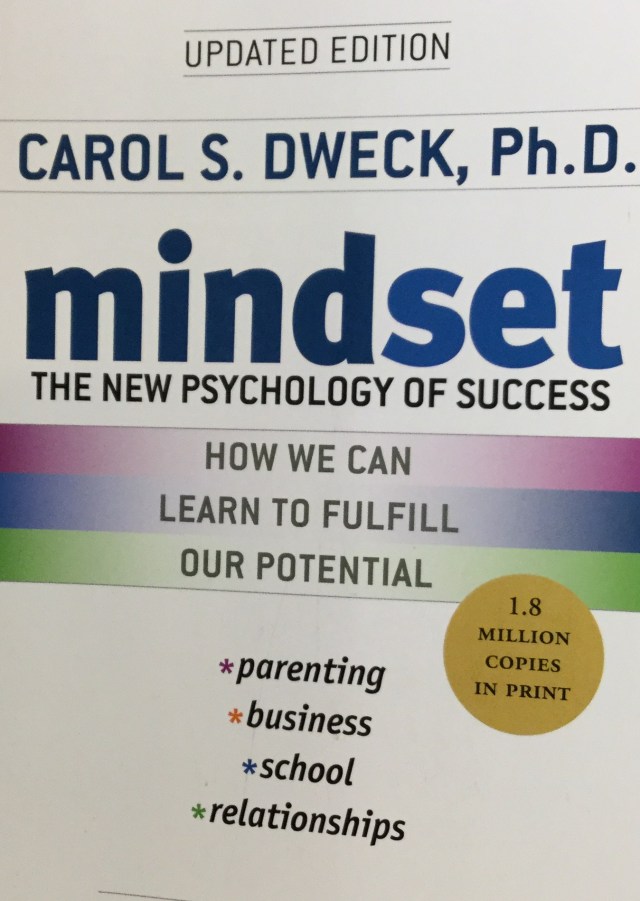
Book Mindset: The new psychology of success.
Cover of the book mindset. Photo by M. Fleming

In her book Mindset, Carol S. Dweck writes:

This growth mindset is based on the belief that your basic qualities are things you can cultivate through your efforts, your strategies, and help from others. Although people may differ in every which way—in their initial talents and aptitudes, interests, or temperaments—everyone can change and grow through application and experience.

This growth mindset is something I’d like to have. But it’s not something one has; it’s not a possession. Instead, I believe a growth mindset is something you constantly work towards. And I’m grateful that a particular challenging student in my past helped me realize this.